


- 0 Comments
- By The Handyman Writer
- Home Maintenance & Repairs
When the clocks go back on Sunday 25 October, London homes start asking more of their electrics than at any other time of year. In older flats and townhouses, that extra demand is often the moment a consumer unit replacement in London stops being a someday job and becomes a pressing one.
Think about a typical December evening. Lights on from half past three. A portable heater in the home office. The tumble dryer working through a week of washing. An oven, a dishwasher, an electric blanket upstairs and a few hundred fairy lights on the tree. Every one of those circuits runs back to a single box, usually tucked in a hallway cupboard and rarely given a second thought.
So What Is a Consumer Unit, Exactly?
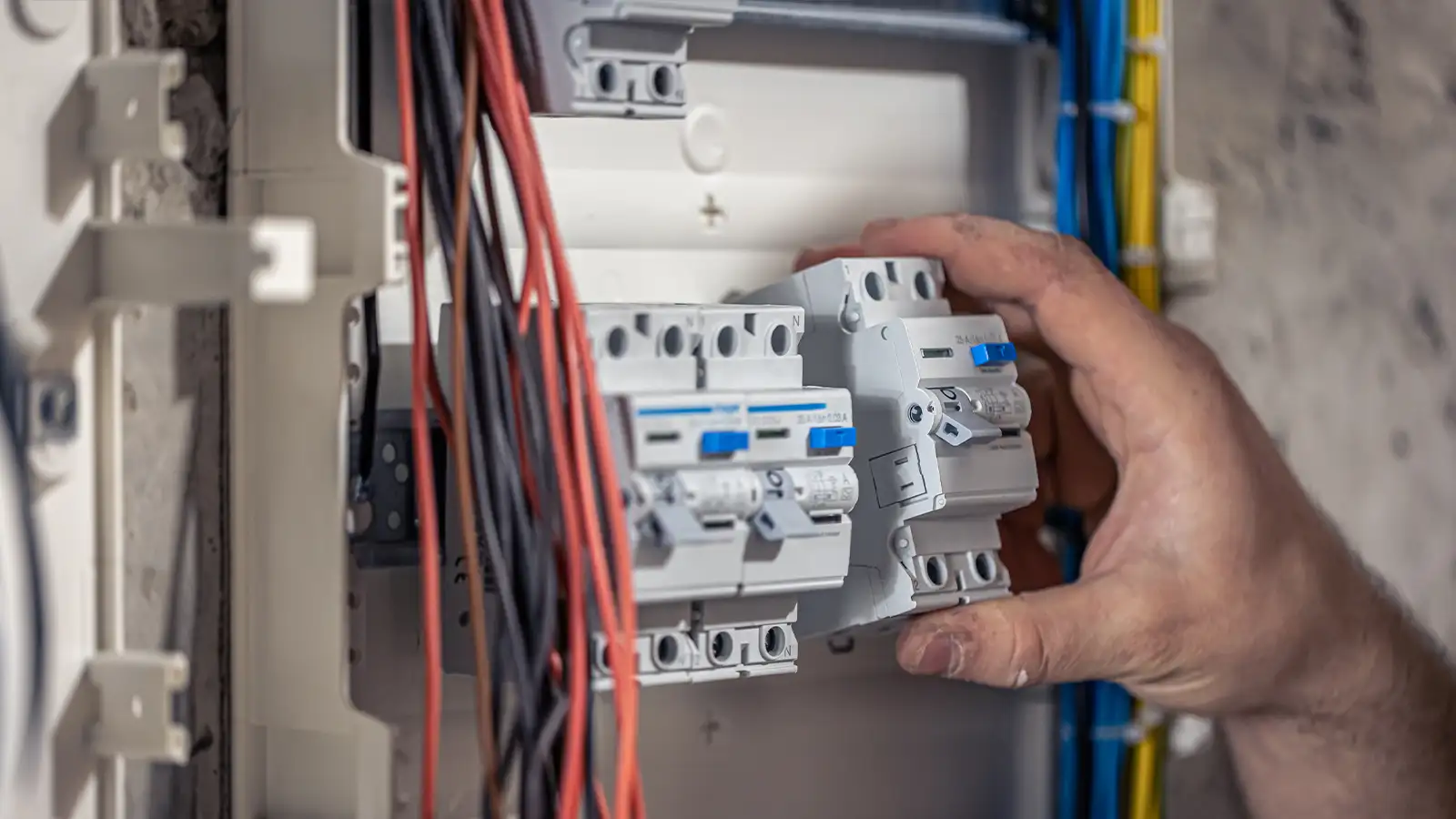
It is the modern name for the fuse box. It takes the supply from your meter and splits it into separate circuits for lighting, sockets, cooker, shower and so on. Each circuit has its own protective device, which cuts the power when something goes wrong. How well it does that depends heavily on when the board was installed.

Signs Your Board Belongs to Another Era
You do not need to be an electrician to spot the warning signs. Open the cupboard and look for any of the following:
- Rewireable fuses, the ceramic carriers with a thin strand of wire inside
- A wooden backboard, brown Bakelite casing or old cast iron switches
- No RCD and no test button anywhere on the board
- A plastic consumer unit fitted before 2016
- A mix of fuses and breakers added piecemeal over the years
- Frequent tripping, buzzing, scorch marks or a warm smell near the board
Any one of these is a good reason to have the installation checked. Several together suggest a fuse box upgrade is overdue.
| Feature | Rewireable fuse board | Early RCD split load board | Modern metal board with RCBOs |
|---|---|---|---|
| Protection against electric shock | None at the board | Shared across half the circuits | Every circuit individually |
| What happens when one appliance faults | That fuse blows | Half the house can go dark | Only the faulty circuit trips |
| Casing | Often wood or Bakelite | Usually plastic | Non combustible metal |
| Meets current Wiring Regulations | No | Rarely | Yes |
Why RCD Protection Is the Headline
A residual current device watches the current flowing out and back along a circuit. If some of it leaks away, through damaged cable or through a person, it cuts the supply in a fraction of a second. RCD protection has been required for most socket circuits in new work since 2008, and it is the single biggest safety gain an old board can receive.
Modern boards often go further, using RCBOs. These combine an RCD and a circuit breaker for each individual circuit, so a faulty kettle no longer plunges the freezer, the router and the bedroom lights into darkness at the same time.
Portable Heaters Deserve Respect
Winter is when portable heaters come out of storage, and electric heater safety is where a tired installation shows its age. A 3kW fan heater draws around 13 amps, the full rating of a standard plug fuse. Run one through an overloaded extension lead on an elderly circuit and heat builds where you cannot see it.
A few simple rules keep the risk down. Plug heaters directly into a wall socket. Keep them at least a metre from curtains, bedding and sofas. Never dry clothes over them, and switch them off when you leave the room or go to bed.
Fairy Lights and the Humble Extension Lead
Christmas brings its own pattern of risk. Old lights come down from the loft with brittle cables, and extension leads multiply behind the sofa. A single four way lead plugged into another one, both feeding a heater, a television and the tree, can easily ask more of one socket than it was ever meant to give.
Check festive lights for cracked cable or loose bulbs before they go up, and replace any set that has seen better days. Unwind cable reels fully when in use, since a coiled reel can overheat. If you find yourself relying on adaptors in most rooms, that is usually a sign the home needs more sockets, which an electrician can add at the same time as a new board.
Do I Need Arc Fault Protection?
An AFDD, or arc fault detection device, spots the electrical signature of a loose connection or crushed cable that is arcing, a common starting point for electrical fires inside walls. Since 2022, the Wiring Regulations have required them on socket circuits in houses in multiple occupation, purpose built student accommodation, care homes and high rise residential buildings. For a typical house or flat they are recommended rather than mandatory, and many homeowners in period properties with older cabling choose to fit them.
The Rule Book Changes This Week
The IET and BSI published Amendment 4 to BS 7671 on 15 April 2026, and the previous version is withdrawn on 15 October 2026. It adds a new chapter on home battery storage and revises the forms electricians use for an EICR, the Electrical Installation Condition Report that grades the safety of an existing installation.
Under the new forms, C1 and C2 observations, meaning danger present or potentially dangerous, make the report unsatisfactory. A further investigation code on its own no longer does.
Private landlords in England must have an EICR carried out at least every five years under the 2020 Electrical Safety Standards regulations, with fines of up to £30,000 for breaches. For owner occupiers, a check every ten years, or whenever you buy a property, is sensible practice.
What the Work Involves
Replacing a consumer unit is notifiable under Part P of the Building Regulations, so it must be carried out by a registered electrician or signed off by Building Control. A straightforward swap usually takes most of a day, with the power off for much of it.

The electrician will test every circuit before connecting it to the new board. This is where hidden problems surface, such as missing earths or tired insulation, and they need fixing before the new unit can be certified. Recent industry price guides put a standard replacement in London at roughly £700 to £1,200, depending on the number of circuits and the specification.
In mansion blocks and converted houses, the meter and board are sometimes in a shared cupboard. A quick word with the managing agent or porter before the work day saves delays.
Our Electricians in Central London
Beck’s Homes UK provides qualified electrical services across Fitzrovia, Westminster, Kensington and Chelsea. We inspect, advise honestly on whether your board needs replacing or simply testing, and carry out upgrades with full certification. Because we also handle decorating and repairs, any making good around the new board is done by the same team.
Better in October Than on Christmas Eve
Electrics rarely fail at a convenient moment. They fail when the house is full, the oven is on and the heaters are working hardest. If your fuse box is older than your boiler, book an inspection now, while there is time to put things right before the festive rush.