


- 0 Comments
- By The Handyman Writer
- Plumbing & Damp
- 9 Likes
The first sign is almost never in your bathroom. It is a phone call from the neighbour downstairs, describing a brown ring spreading across their sitting-room ceiling, and asking — politely, for now — whether you have had any trouble with your shower.
By that point the water has been travelling for weeks. And in a Kensington mansion block or a Chelsea period conversion, what happens next is rarely just a repair. It becomes a conversation about liability, insurance excesses and who is paying for whose ceiling.
Here is the part most people get wrong. A shower leaking into flat below is usually not a plumbing fault at all. The pipes are typically fine. The failure is in the tiling — the grout and the sealant — and that changes both the diagnosis and the cure.
Grout is not waterproof, and neither is silicone
This is the single most misunderstood fact in any bathroom, and it explains almost every case we attend.
Cementitious grout is water-resistant, not waterproof. It is designed to fill the joints between tiles and shed water, not to hold it back. The same is true of a silicone bead. Neither is the waterproof layer, and neither was ever meant to be.
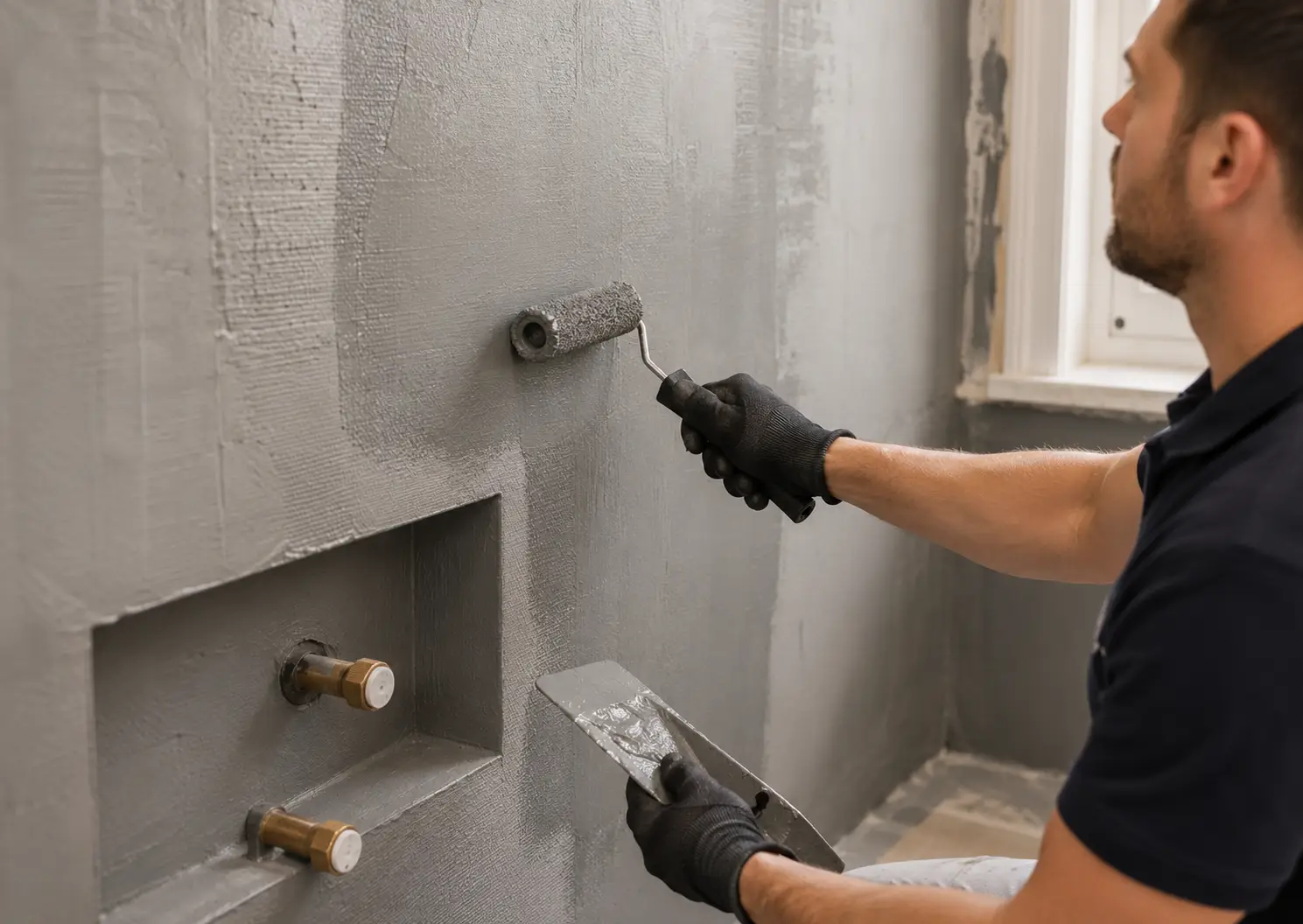
The British Standard for wall and floor tiling, BS 5385-4, is clear on the principle: in areas subject to frequent wetting, the structure behind the tiles should itself be watertight. That means a proper tanking system — a waterproof membrane applied to the substrate before a single tile is fixed. The tiles and grout are the wearing surface. The membrane is the defence.
When a bathroom is tiled straight onto plasterboard with no tanking, the grout becomes the only thing standing between the shower and the joists. It will hold for a while. Then it will not.
How a shower leaking into flat below actually happens
Failing grout does not usually produce a dramatic gush. It produces a slow, patient migration that is far more destructive because nobody notices it.
Water penetrates a hairline crack in the grout, reaches the substrate, and soaks into plasterboard or timber. It tracks along a joist — often for a metre or more — and emerges through the ceiling below at a point nowhere near the shower. This is why a shower leaking into flat below is so often misdiagnosed, and why a plumber can spend a morning pressure-testing perfectly sound pipework and find nothing wrong.
The usual failure points are predictable:
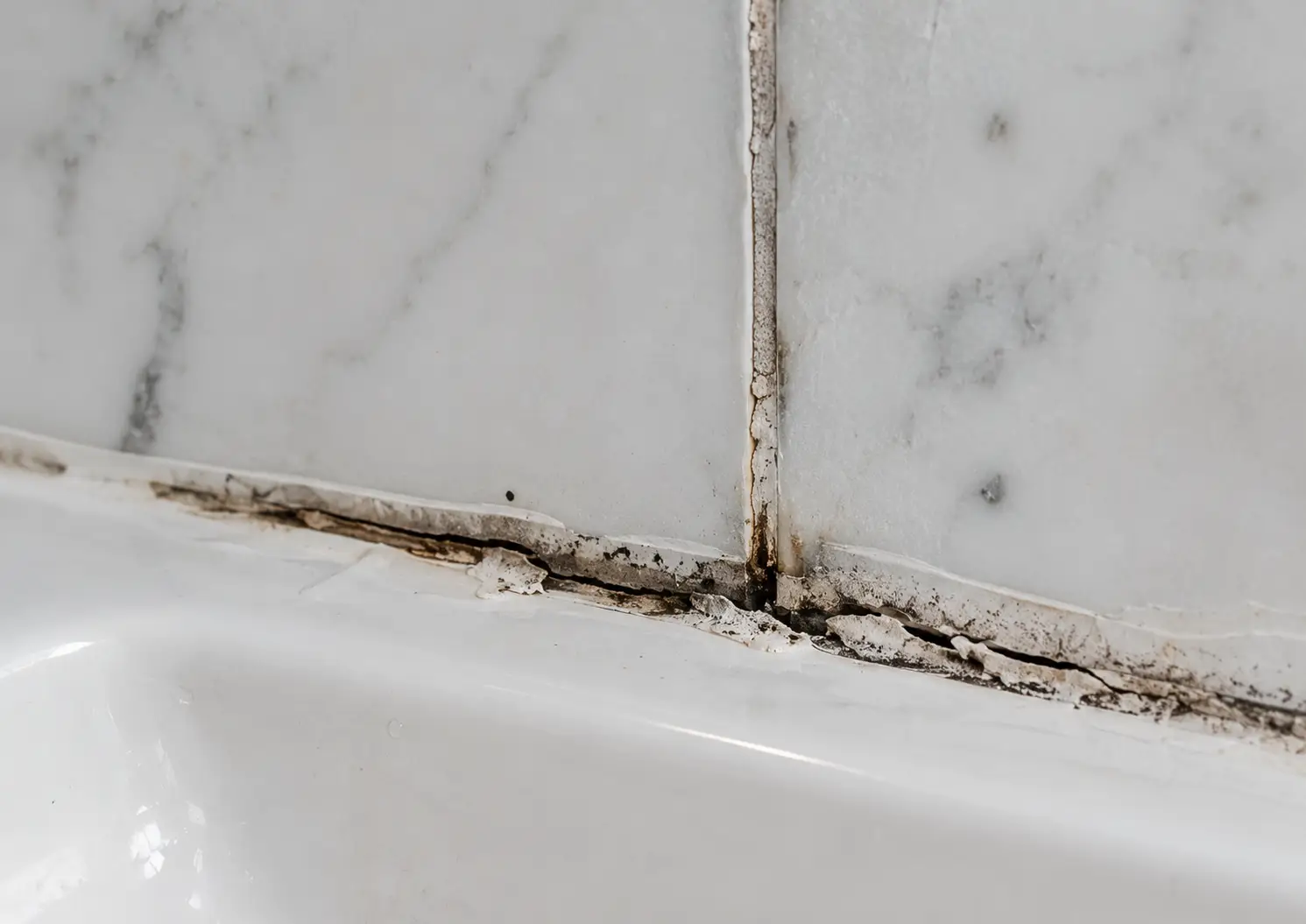
- Internal corners and the tile-to-tray junction. These joints move as the building breathes and the tray flexes underfoot. Rigid grout cannot accommodate that movement, so it cracks. These joints should be sealed with a flexible curing sealant, never grout — and when the original fitter used grout, failure is a matter of time.
- The bath or shower tray edge. Silicone sealant here takes the most punishment and is the first thing to perish.
- Around wastes and shower valves, where tiles have been cut and the seal is fiddly.
- Anywhere the previous repair was cosmetic — new silicone smeared over old, mouldy sealant, trapping moisture beneath it.
Grout that has gone powdery, hollow-sounding or missing in patches is not a decorating problem. It is an active water path.
The warning signs worth acting on
Most leaks announce themselves for months before they reach the neighbour. Look for:
- Cracked, crumbling or missing grout, particularly in corners
- Silicone sealant that is splitting, shrinking, hardening or peeling away from the tile
- Black mould on the sealant that returns within days of being scrubbed
- Tiles that sound hollow when tapped, or move under pressure
- A persistent musty smell in the bathroom
- Discoloured or lifting flooring on the landing side of the bathroom wall
- Any staining on the ceiling below — the point at which the conversation gets expensive
Silicone sealant does not last forever. Typically it gives five to ten years in a domestic bathroom, and considerably less if it was poorly applied to a damp or dusty surface in the first place. If you cannot remember the last time it was replaced, it is due.
The Royal Institution of Chartered Surveyors names this failure mode directly in its consumer guidance, listing broken mastic seals around showers among the common causes of damp, and recommending replacement as routine maintenance. It is not an exotic problem. It is simply an ignored one.
Why a shower leaking into flat below matters more in London
In a house, a failing seal damages your own floor. In a Central London flat, it damages someone else’s home — and the lease decides what happens next. Insurers call this an escape of water, and it is one of the most common claims made on a block’s buildings policy.
Broadly, the freeholder or managing agent is responsible for the structure and common parts: the roof, external walls, shared risers. Items serving only your flat — the bath, the shower, its tiling and its seals — generally sit with you as leaseholder. Where the water originates inside your bathroom, the trail leads back to your door.
The point that catches people out is negligence. A sudden, unforeseeable failure is treated as an accident, and an escape of water claim on the buildings policy will normally respond. But where a leaseholder knew about a slow drip, or looked at split, blackened sealant for a year and did nothing, negligence can be argued. At that point you may be exposed to the cost of your own repair and the damage below, without the insurer stepping in. Who pays the excess is a separate argument the lease will settle.
None of this is legal advice, and your lease governs. But the commercial logic is blunt. To your neighbour it is a water leak from flat above; to you it is a repair bill, an insurance argument and a soured relationship with the managing agent. And a water leak from flat above is one of the fastest ways to fall out with all three at once — over a joint of silicone that cost almost nothing to renew.
Regrouting, resealing, or starting again
Not every bathroom needs ripping out. The right answer depends on how far the water has already travelled.
Resealing suits a bathroom where the tiling is sound and only the silicone has perished. The old sealant is cut out completely, the joint is cleaned back to a dry, dust-free surface and a new bead is applied. Done properly it is a half-day job. Done badly — new silicone laid over old — it traps moisture and fails within months.
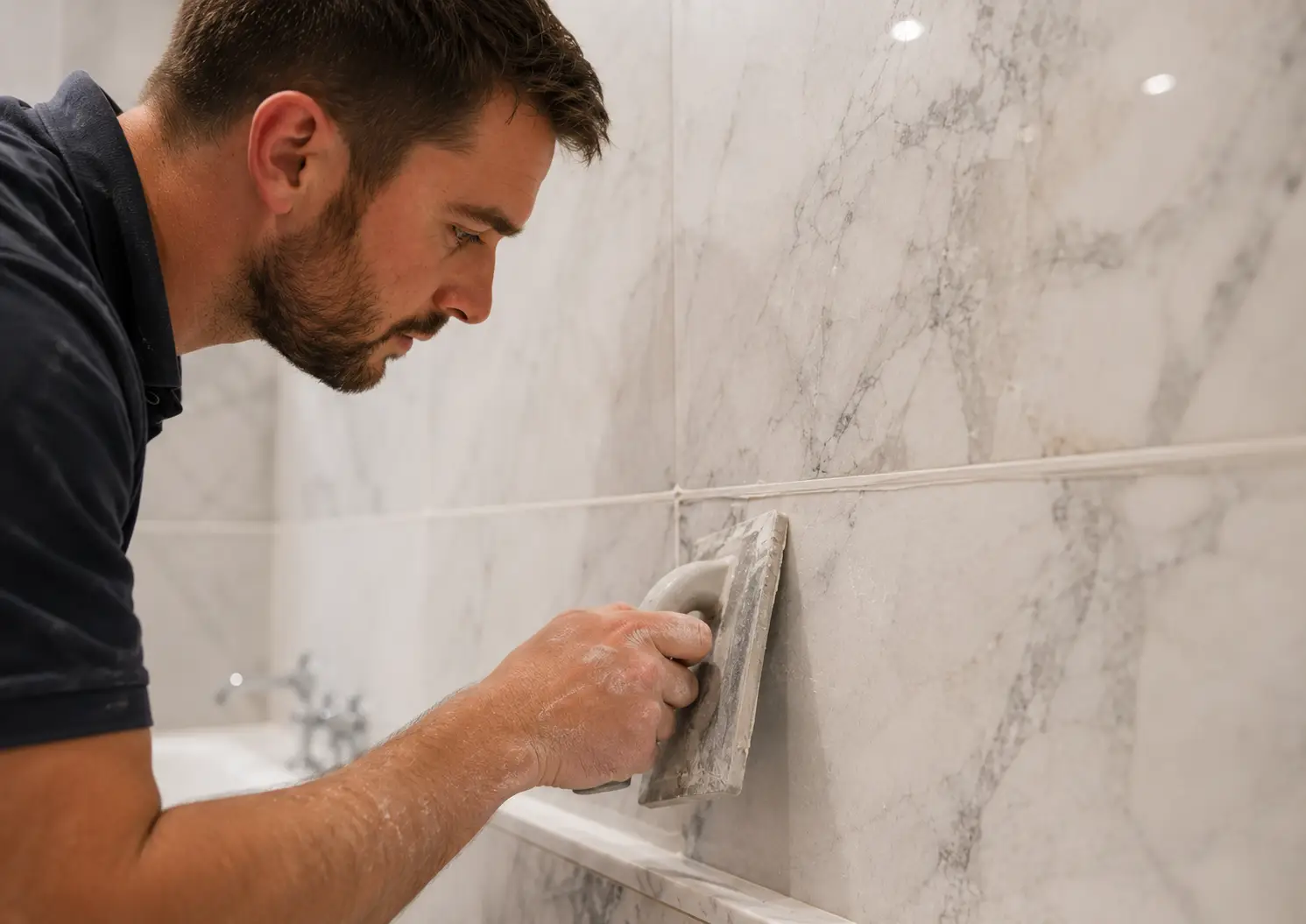
Regrouting bathroom tiles is the step up. The failed grout is raked out to depth and replaced, with flexible sealant at the movement joints where it belongs. Regrouting bathroom tiles works well where the tiles themselves are firmly bonded and the substrate is dry, and it buys many years. It cannot rescue a bathroom that was never tanked.
Re-tiling or full refurbishment is the honest answer when tiles are drummy, the substrate is soft, or the ceiling below is already marked. If the board behind the tiles has been wet for a year, no amount of grout will fix it. Stripping back, tanking properly and re-tiling is the only repair that ends the problem rather than deferring it — and it is where a bathroom renovation stops being cosmetic and starts being structural.
The distinction matters commercially. Resealing is cheap. A bathroom renovation forced by two years of ignored water damage, plus your neighbour’s ceiling, is not. Left long enough, a shower leaking into flat below stops being a tiling job and becomes a building repair.
Getting it looked at properly
The difficulty in a period building is that nothing is where you expect it. Water tracks along Victorian joists, disappears behind lath and plaster, and surfaces two rooms away. Diagnosing that takes someone who has opened up these buildings before and knows how they behave — not a guess and an optimistic tube of silicone.
Beck’s Homes UK carries out tiling, resealing and full bathroom refurbishment across Westminster, Kensington, Chelsea and the surrounding centre. Our tiling services in London cover everything from tile regrouting in London flats to complete strip-out, tanking and re-tiling where the damage has gone too far for a surface fix. We will tell you honestly which one you need, and we will say so if resealing is genuinely enough.
If your grout is cracking, your sealant is black, or your neighbour has started asking careful questions about their ceiling, the cheapest day to deal with it was last year. The second cheapest is today. Contact Beck’s Homes UK for an inspection, and we will find where the water is going before anyone else has to.
A shower leaking into flat below never resolves itself, and the cost of a shower leaking into flat below rises every week it is left. Tile regrouting in London is a modest job. The argument that follows a ruined ceiling is not.